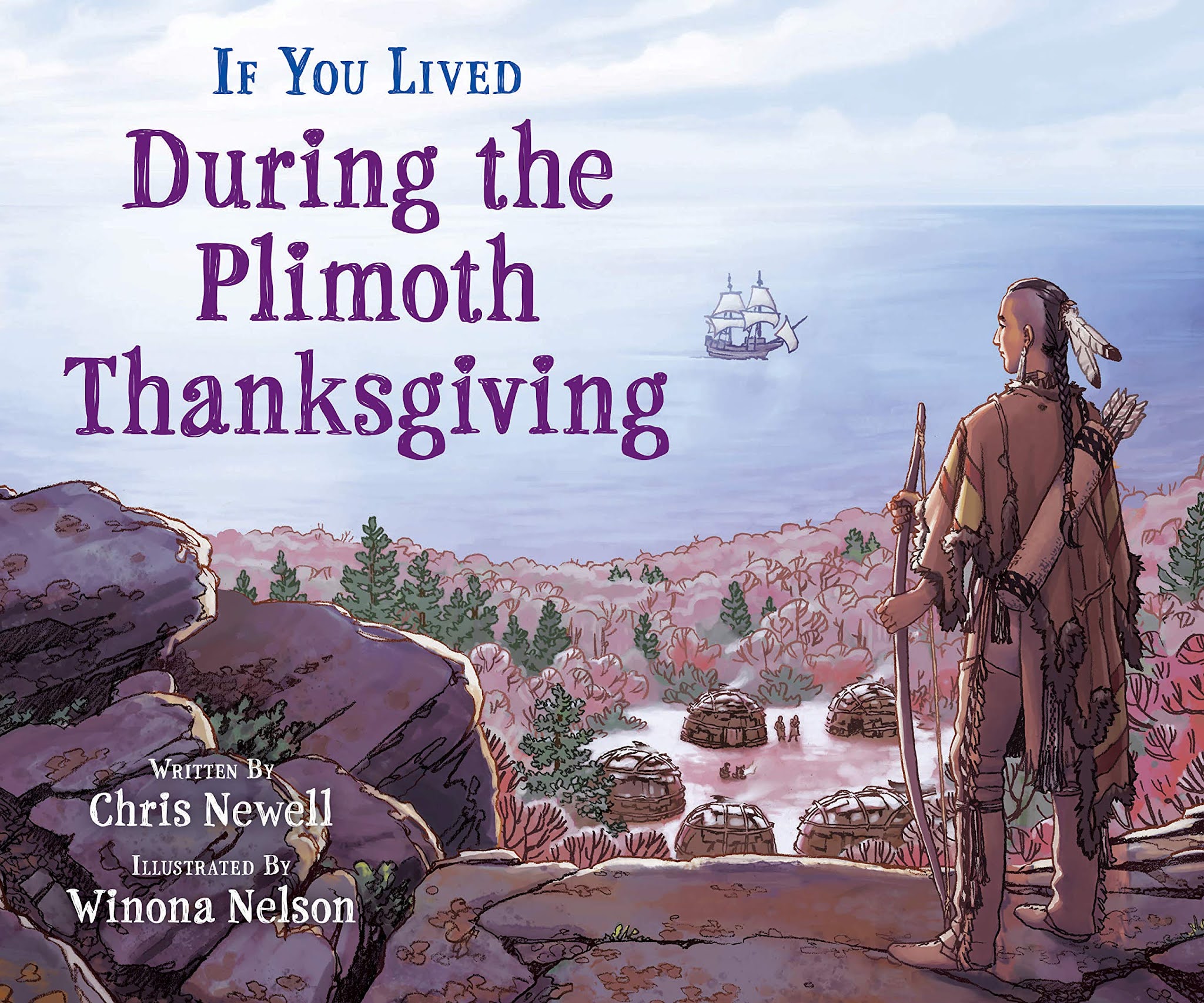
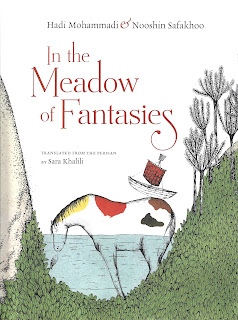
Today Mary Ann and Dr. Xenia Hadjioannou of Penn State Harrisburg sent the following letter to The New York Times requesting that the paper add three children’s nonfiction bestseller lists to parallel the existing picture book, middle grade, and young adult lists, which focus on fiction.
The submitted letter included the signatures of more than 500 educators and librarians as well as the institutional signatures of the National Council of Teachers of English (NCTE), the Society of Children’s Book Writers and Illustrators, and the Children’s Literature Assembly of NCTE. The letter is also being shared on more than 20 blogs that serve the literacy and children's literature communities.
We now welcome everyone–parents, grandparents, aunts, uncles, caregivers, authors, illustrators, agents, book publishers, and book sellers–to sign the letter.
If you support this request, please add your information to the letter by following the link to the signature collection form: https://forms.gle/w3SZdPGY4Qp5AQ65A . Your email address will not be made public.
Feel free to share the letter and signature collection form with other individuals who you think would also be interested in signing, and share widely on social media using the #KidsLoveNonfiction hashtag.
LETTER TO THE NEW YORK TIMES
Nonfiction books for young people are in a golden age of creativity, information-sharing, and reader-appeal. But the genre suffers from an image problem and an awareness problem. The New York Times can play a role in changing that by adding a set of Nonfiction Best Seller lists for young people: one for picture books, one for middle grade literature, and one for young adult literature.
Today’s nonfiction authors and illustrators are depicting marginalized and minority communities throughout history and in our current moment. They are sharing scientific phenomena and cutting-edge discoveries. They are bearing witness to how art forms shift and transform, and illuminating historical documents and artifacts long ignored. Some of these book creators are themselves scientists or historians, journalists or jurists, athletes or artists, models of active learning and agency for young people passionate about specific topics and subject areas. Today’s nonfiction continues to push boundaries in form and function. These innovative titles engage, inform, and inspire readers from birth to high school.
Babies delight in board books that offer them photographs of other babies’ faces. Toddlers and preschoolers fascinated by the world around them pore over books about insects, animals, and the seasons. Children, tweens, and teens are hungry for titles about real people that look like them and share their religion, cultural background, or geographical location, and they devour books about people living different lives at different times and in different places. Info-loving kids are captivated by fact books and field guides that fuel their passions. Young tinkerers, inventors, and creators seek out how-to books that guide them in making meals, building models, knitting garments, and more. Numerous studies have described such readers and their passionate interest in nonfiction (Jobe & Dayton-Sakari, 2002; Moss and Hendershot, 2002; Mohr, 2006). Young people are naturally curious about their world. When they are allowed to follow their passions and explore what interests them, it bolsters their overall wellbeing. And the more young people read, the more they grow as readers, writers, and critical thinkers (Allington & McGill-Franzen, 2021; Van Bergen et al., 2021).
Research provides clear evidence that many children prefer nonfiction for their independent reading, and many more select it to pursue information about their particular interests (Doiron, 2003; Repaskey et al., 2017; Robertson & Reese, 2017; Kotaman & Tekin, 2017). Creative and engaging nonfiction titles can also enhance and support science, social studies, and language arts curricula. And yet, all too often, children, parents, and teachers do not know about recently published nonfiction books. Bookstores generally have only a few shelves devoted to the genre. And classroom and school library book collections remain dominated by fiction. If families, caregivers, and educators were aware of the high-quality nonfiction that is published for children every year, the reading lives of children and their educational experiences could be significantly enriched.
How can The New York Times help resolve the gap between readers’ yearning for engaging nonfiction, on the one hand, and their lack of knowledge of its existence, on the other? By maintaining separate fiction and nonfiction best seller lists for young readers just as the Book Review does for adults.
The New York Times Best Sellers lists constitute a vital cultural touchstone, capturing the interests of readers and trends in the publishing world. Since their debut in October of 1931, these lists have evolved to reflect changing trends in publishing and to better inform the public about readers’ habits. We value the addition of the multi-format Children’s Best Seller list in July 2000 and subsequent lists organized by format in October 2004. Though the primary purpose of these lists is to inform, they undeniably play an important role in shaping what publishers publish and what children read.
Adding children’s nonfiction best-seller lists would:
Help family members, caregivers, and educators identify worthy nonfiction titles.
Provide a resource for bibliophiles—including book-loving children—of materials that satisfy their curiosity.
Influence publishers’ decision-making.
Inform the public about innovative ways to convey information and ideas through words and images.
Inspire schools and public libraries to showcase nonfiction, broadening its appeal and deepening respect for truth.
We, the undersigned, strongly believe that by adding a set of nonfiction best-seller lists for young people, The New York Times can help ensure that more children, tweens, and teens have access to books they love. Thank you for considering our request.
Dr. Mary Ann Cappiello
Professor, Language and Literacy
Graduate School of Education, Lesley University
Cambridge, Massachusetts
Former Chair, National Council of Teachers of English (NCTE) Orbis Pictus Award for Outstanding Nonfiction Committee, Blogger at The Classroom Bookshelf of School Library Journal, Founding Member of The Biography Clearinghouse
Dr. Xenia Hadjioannou
Associate Professor, Language and Literacy Education
Penn State University, Harrisburg Campus
Harrisburg, Pennsylvania
Vice President of the Children’s Literature Assembly (CLA) of the National Council of Teachers of English (NCTE), co-editor of The CLA Blog, Founding Member of The Biography Clearinghouse
References
Allington, R. L., & McGill-Franzen, A. M. (2021). Reading volume and reading achievement: A review of recent research. Reading Research Quarterly, 56(S1), S231–S238. https://doi.org/10.1002/rrq.404
Correia, M. (2011). Fiction vs. informational texts: Which will your kindergarteners choose? Young Children, 66(6), 100-104.
Doiron, R. (2003). Boy books, girl books: Should we re-organize our school library collections? Teacher Librarian, 30(3), 14.
Kotaman H. & Tekin A.K. (2017). Informational and fictional books: young children's book preferences and teachers' perspectives. Early Child Development and Care, 187(3-4), 600-614, DOI: 10.1080/03004430.2016.1236092
Jobe, R., & Dayton-Sakari, M. (2002). Infokids: How to use nonfiction to turn reluctant readers into enthusiastic learners. Pembroke.
Mohr, K. A. J. (2006). Children’s choices for recreational reading: A three-part investigation of selection preferences, rationales, and processes. Journal of Literacy Research, 38(1), 81–104. https://doi.org/10.1207/s15548430jlr3801_4
Moss, B. & Hendershot, J. (2002). Exploring sixth graders' selection of nonfiction trade books: when students are given the opportunity to select nonfiction books, motivation for reading improves. The Reading Teacher, 56(1), 6-17.
Repaskey, L., Schumm, J. & Johnson, J. (2017). First and fourth grade boys’ and girls’ preferences for and perceptions about narrative and expository text. Reading Psychology, 38(8), 808-847.
Robertson, Sarah-Jane L. & Reese, Elaine. (2017). The very hungry caterpillar turned into a butterfly: Children's and parents' enjoyment of different book genres. Journal of Early Childhood Literacy, 17(1), 3-25.
Van Bergen, E., Vasalampi, K., & Torppa, M. (2021). How are practice and performance related? Development of reading from age 5 to 15. Reading Research Quarterly, 56(3), 415–434. https://doi.org/10.1002/rrq.309.